




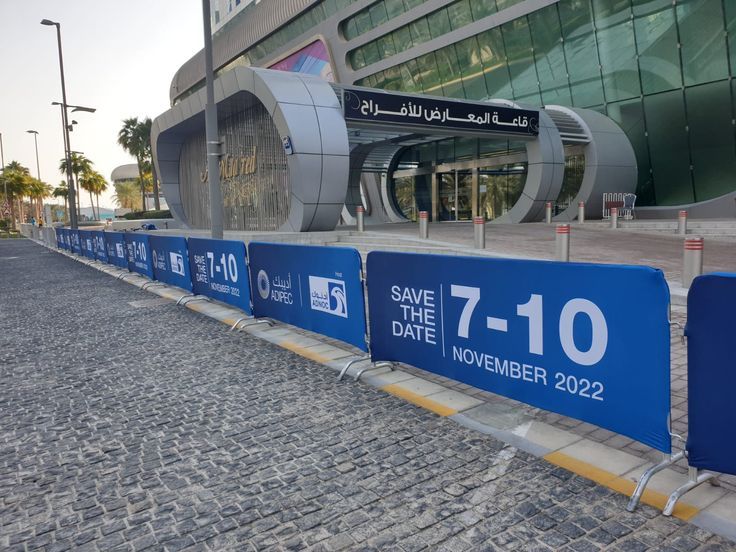
Crowd barriers are necessary at many concerts, festivals, sporting events, municipal programs, and venue entrances, but their value does not have to end with pedestrian control. Event teams can use barricade covers to display directions, identify restricted areas, recognize sponsors, and give temporary boundaries a cleaner public-facing appearance.
Barriers are often positioned where attendees naturally look, including entrances, queues, stage areas, registration points, and high-traffic walkways. Covering these surfaces with clear graphics or messaging allows planners to use equipment already present at the site rather than adding separate signs or display structures.
For event planners, venues, government agencies, and security companies, this approach can support both operations and presentation.
Turning Necessary Equipment Into Useful Display Space
Metal barricades are usually installed for practical reasons. They guide people, close walkways, protect equipment, and separate public areas from controlled spaces. Because they occupy prominent locations, they also provide useful display space.
A fitted cover can carry an event logo, sponsor message, directional instruction, or solid color treatment. This makes the barrier feel like part of the site plan rather than equipment placed without visual consideration.
At large events, repeating the same design across several barrier runs can create a more consistent appearance. Visitors encounter the same colors and messages as they move from parking or entry areas toward the main event space.
This repeated visibility can also make important instructions easier to notice.
Improving Wayfinding and Access Communication
Clear wayfinding reduces confusion at crowded sites. Visitors need to know where lines begin, which gate to use, and whether a space is reserved for staff, media, performers, or ticket holders.
Printed barrier covers can display messages such as “Event Entrance,” “VIP Check-In,” “Staff Only,” or “Exit This Way.” When placed along queues and walkways, these instructions can guide attendees before they need to ask a staff member.
They may also help identify separate lines for general admission, ticket pickup, security screening, or accessible entry. This can reduce mixing between groups and make the arrival process easier to follow.
For municipal events and public programs, covers can display road closure information, viewing-area boundaries, or community event directions. The messaging should remain brief, visible, and easy to understand from a reasonable distance.
Creating Space for Sponsors and Event Branding
Sponsors often expect visible recognition as part of an event partnership. Barrier covers can provide exposure along entrances, performance areas, race routes, fan zones, and other places with steady foot traffic.
Instead of placing every sponsor logo on one crowded banner, planners can distribute branding across different sections of the site. This may give each sponsor more space and make individual logos easier to see.
Corporate events can use covers to carry company colors, campaign names, or product messaging. Festivals can repeat the event identity across the perimeter. Sporting events can use them near fan areas, registration zones, or media positions.
The design should still respect the operational purpose of the barrier. Important directions and safety information should remain clear rather than being lost within complicated graphics.
Supporting a Cleaner Event Environment
Barricade covers can make temporary sites feel more finished. Exposed metal barriers are functional, but they may look visually harsh at a formal, branded, or sponsor-supported event.
A fitted cover can soften that appearance and help the barricade blend with the surrounding setup. This may be useful near stages, hospitality areas, red carpets, registration desks, or public-facing venue entrances.
Covers can also help screen some activity behind the barrier. They may reduce direct views of cables, supplies, equipment cases, or operational areas that organizers prefer to keep out of the main sightline.
However, screening should be planned carefully. Security teams may still need visibility through or around certain barriers, and outdoor covers should not create avoidable wind concerns.
What to Review Before Ordering
Correct measurements are essential. The cover should match the length and height of the barricade so it sits neatly without excessive sagging or loose material.
Planners should confirm whether the design is intended for one side or both sides. A barrier along a public walkway may need messaging visible from two directions, while a perimeter cover may only need printing on the attendee-facing side.
Material selection should match the setting. Outdoor covers may face sun, wind, dust, and occasional moisture. Indoor covers may place greater emphasis on print detail and visual finish.
Graphic design also needs practical consideration. Text should be large enough to read, colors should provide clear contrast, and logos should not be crowded together. Important instructions should receive more visual priority than decorative elements.
Attachment methods should allow the cover to remain secure while still being manageable during setup and removal. Event crews often work within short installation windows, so complicated fitting can slow the process.
Common Uses Across Event Types
Concerts and festivals can use barrier covers around entrance lines, stage areas, sponsor zones, merchandise sections, and backstage access points. Race organizers can place them near registration, starting areas, finish lines, and spectator boundaries.
Sporting venues may use covers in fan zones, ticket queues, media sections, or player access areas. Trade shows and corporate events can use them near registration desks, presentation areas, and temporary branded spaces.
Municipal agencies can use them for street fairs, parades, public ceremonies, holiday programs, and community gatherings. Security teams may also use clearly marked covers to identify controlled entry points and restricted sections.
Final Thoughts
Barricade covers allow event teams to get more value from necessary crowd control equipment. They can carry directions, identify access zones, support sponsor recognition, screen operational areas, and give temporary event layouts a more considered appearance. The best results come from accurate sizing, readable graphics, suitable materials, and coordination with the wider crowd management plan.
For planners, venues, municipal agencies, and security teams looking for crowd barriers and printed cover options, Epic Crowd Control provides equipment for public events, private functions, and temporary site layouts. Visit the website to review options for your next event.