



A medicine cabinet is one of the most practical storage solutions for any bathroom, but it can quickly become overcrowded if everything gets tossed inside without a system. From skincare products and medications to grooming tools and first-aid supplies, it’s easy for shelves to fill up and become disorganized.
The key to keeping a medicine cabinet clutter-free is knowing what belongs inside, organizing similar items together, and regularly removing anything you no longer need. In this guide, we’ll explore the best items to store in a medicine cabinet and share simple organization tips to help you maximize every inch of space.
Why Organization Matters
An organized medicine cabinet helps you:
- Find items quickly
- Reduce countertop clutter
- Make daily routines more efficient
- Prevent expired products from piling up
- Keep frequently used essentials within easy reach
Grouping similar items and assigning dedicated storage zones makes it much easier to maintain a tidy cabinet over time.
1. Daily Oral Care Essentials
Your medicine cabinet is the perfect place to keep everyday oral hygiene products.
Store items such as:
- Toothbrushes
- Toothpaste
- Dental floss
- Mouthwash (travel-size bottles if space is limited)
- Whitening strips
- Denture supplies
Keeping these products together creates a convenient morning and evening routine.
2. Skincare Products
Most people use multiple skincare products every day, making the medicine cabinet an ideal storage location.
Consider storing:
- Facial cleansers
- Moisturizers
- Serums
- Eye creams
- Lip balm
- Sunscreen (if recommended by the manufacturer for indoor storage)
Group products by routine, such as morning and nighttime skincare, so they’re easier to locate. Using small bins or trays can also prevent bottles from tipping over.
3. Everyday Medications
A medicine cabinet can be used for medications that are appropriate for bathroom storage according to their labels.
Examples include:
- Pain relievers
- Allergy medication
- Cold and flu medicine
- Antacids
- Cough drops
Always check the storage instructions on medication packaging. Some prescription medicines should be stored in a cool, dry location outside the bathroom because heat and humidity can affect their effectiveness.
4. First-Aid Supplies
Keeping basic first-aid items together makes them easier to find during emergencies.
Useful supplies include:
- Adhesive bandages
- Antiseptic wipes
- Medical tape
- Gauze pads
- Antibiotic ointment
- Disposable gloves
- Tweezers
Store these items in a labeled container so they’re easy to access when needed.
5. Hair Care Accessories
Small hair accessories often create unnecessary clutter when left on countertops.
Organize items like:
- Hair ties
- Bobby pins
- Hair clips
- Small combs
- Travel brushes
Use small containers or drawer organizers to prevent these items from getting mixed together.
6. Grooming Tools
Daily grooming products fit neatly inside a medicine cabinet.
Consider storing:
- Nail clippers
- Tweezers
- Small scissors
- Electric razor accessories
- Disposable razors
- Eyebrow trimmers
Keeping these tools together helps simplify your grooming routine.
7. Cosmetics You Use Every Day
If space allows, store only your everyday makeup essentials.
For example:
- Foundation
- Concealer
- Mascara
- Lipstick
- Makeup brushes
- Compact powder
Avoid filling the cabinet with products you rarely use, as this can quickly create clutter.
8. Contact Lens Supplies
If you wear contact lenses, keeping related supplies together makes mornings much easier.
Store:
- Contact lens cases
- Contact solution
- Eye drops
- Backup lenses (if recommended)
Having these items in one designated section saves time and keeps them clean.
9. Personal Care Items
Your medicine cabinet is also a good place for small personal care essentials.
Examples include:
- Cotton swabs
- Cotton pads
- Dental picks
- Nail files
- Travel-sized toiletries
Use clear containers so you can easily see when supplies need to be replenished.
What Shouldn’t Be Stored in a Medicine Cabinet?
To avoid clutter—and in some cases, to protect product quality—consider storing these items elsewhere:
- Bulk toiletries
- Cleaning supplies
- Extra toilet paper
- Towels
- Hair dryers
- Large styling tools
- Backup shampoo and conditioner
- Excess inventory of personal care products
Many medications also shouldn’t be stored in humid bathrooms unless the label specifically indicates it’s acceptable. Heat and moisture can reduce the effectiveness of certain medicines. Always follow the manufacturer’s storage instructions.
Organize by Category
One of the easiest ways to prevent clutter is to assign each shelf a purpose.
For example:
Top shelf
- First-aid supplies
- Occasionally used medications
Middle shelf
- Daily skincare
- Oral care
- Contact lens supplies
Bottom shelf
- Grooming tools
- Cosmetics
- Personal care products
Creating designated zones makes it much easier to maintain organization over time.
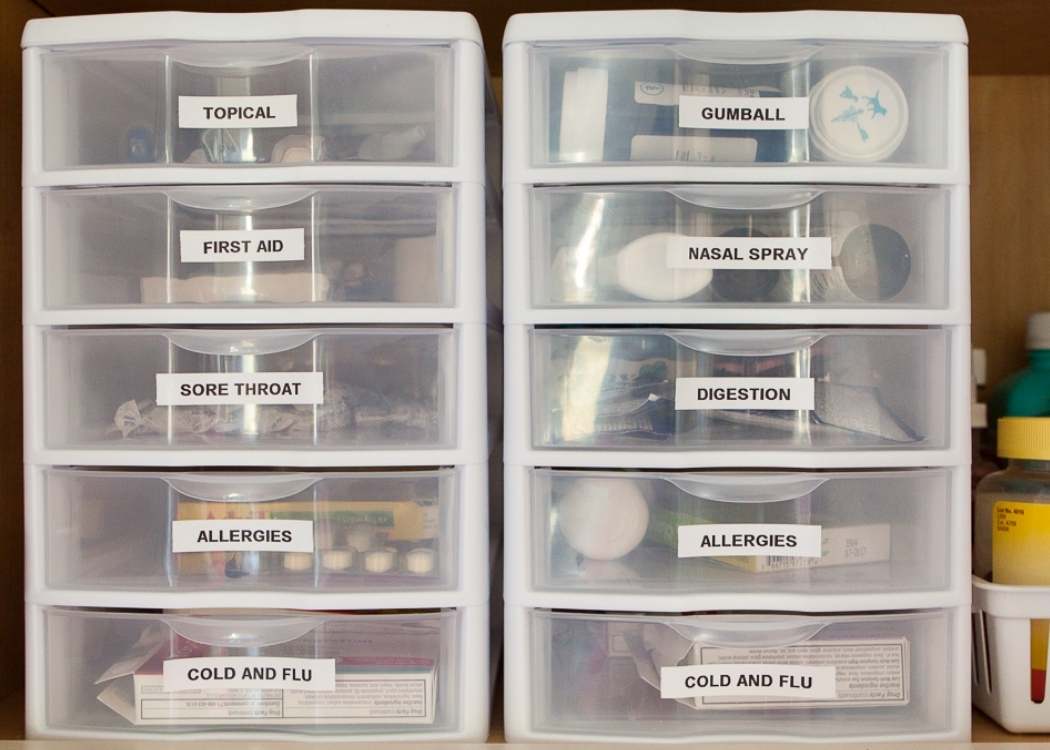
Use Storage Accessories
Simple organizers can dramatically improve your medicine cabinet.
Helpful accessories include:
- Clear acrylic bins
- Shelf risers
- Small baskets
- Divided trays
- Stackable containers
- Labels
These tools maximize vertical space while keeping similar items together.
Declutter Regularly
Even the best-organized cabinet needs occasional maintenance.
Every few months:
- Check expiration dates.
- Remove empty containers.
- Dispose of expired medications according to local guidelines.
- Donate unopened personal care products when appropriate.
- Wipe down shelves.
Regular decluttering prevents unnecessary buildup and keeps your cabinet functional.
Store Frequently Used Items at Eye Level
Place the products you use every day where they’re easiest to reach.
Reserve higher or lower shelves for:
- Backup supplies
- Seasonal medications
- Occasionally used products
This simple arrangement saves time during busy mornings.
Avoid Overstocking
Buying in bulk may save money, but storing every backup bottle inside your medicine cabinet often creates unnecessary clutter.
Instead:
- Keep one active product in the cabinet.
- Store backups in a linen closet or another dry storage area.
- Refill the cabinet as needed.
This approach keeps your shelves neat while ensuring essentials are always available.
Create a Family-Friendly Organization System
If multiple people share the same bathroom, designate separate sections for each person.
You can use:
- Labeled bins
- Individual shelves
- Color-coded organizers
This helps everyone quickly locate their own items while reducing mix-ups.
Conclusion
A well-organized medicine cabinet should make your daily routine easier—not more frustrating. By storing only the essentials, grouping similar items together, using simple organizers, and decluttering regularly, you can keep your bathroom neat without sacrificing convenience. The goal is to create a storage system that’s easy to maintain and allows you to find what you need in seconds.
If you’re looking for a stylish and functional medicine cabinet that helps maximize storage while keeping your bathroom organized, AllSumHome offers a wide selection of thoughtfully designed options. From compact cabinets for smaller bathrooms to spacious mirrored models with adjustable shelves and modern features, AllSumHome has solutions to help you create a cleaner, more organized, and more efficient bathroom.